




Contact Info
- Phone:
- 406-587-6701
Basics
- Season:
- Year round
Description
The Gallatin River originates from Gallatin Lake at 9950 feet above sea level in Yellowstone National Park. It then meanders for about 20 miles through a mountain meadow setting before entering the Gallatin Canyon in the vicinity of the Taylor Fork drainage. At the Taylor Fork confluence, the valley floor narrows and the river assumes a higher gradient with faster water velocities and larger sized streambed materials. The Gallatin retains this character of deep pools separated by high velocity riffles and runs, with an abundance of boulder formed pocket water for a distance of about 35 miles. At that point, the river leaves the Forest and enters the Gallatin Valley, where it flows north through private land toward the Three Forks of the Missouri River.
Fishing
Fish:
Brook Trout
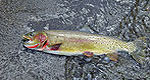
Cutthroat Trout
Rainbow Trout
Whitefish
Details
Season:
Camping Info
Additional Details:
Fishing in Yellowstone National Park requires a special fishing permit, which can be obtained at the Park Service Ranger stations. Fishing from a boat is not permitted in the Gallatin River from the Yellowstone National Park boundary to the confluence with the East Gallatin River.
The Gallatin River contains a popular stretch of whitewater, which attracts recreational and commercial floaters during spring run-off. This section between Moose Creek Flat and Squaw Creek Bridge can receive heavy boat traffic. Wade fishing is the most popular form of fishing on the Gallatin River. Fishing from a boat is prohibited. Please use caution when wading especially in the canyon section, which contains swift currents and slippery rocks.
The Taylor Fork is a large tributary that enters the Gallatin River about three miles downstream of the Yellowstone National Park boundary. This drainage contains extensive amounts of a highly erosive fine textured soil, which has the capability of discoloring the river during spring runoff and also after localized thunderstorm events. Clear water can usually be found upstream of the Taylor Fork.
Cold water temperatures, and harsh overwintering conditions limit fish production in the upper Gallatin River. Rainbow trout are the most common trout species in the river. Fish densities are highest downstream of the West Fork of the Gallatin, which enters the main river near the Big Sky exit on U.S 191. Recent rainbow trout population estimates conducted by Montana Fish Wildlife and Parks personnel, indicate the number of fish over 8 inches are in excess of 1400 fish per mile downstream of the West Fork of the Gallatin River.
Peak flows and maximum turbidity usually occur between May 1 and June 30. The salmon fly (Pteronarcys californica) hatch on the Gallatin River usually occurs between June and mid July.
Amenities
Map + Directions
Basic Directions
US Highway 191 parallels the entire length of the river as it flows through the Gallatin National Forest. Numerous access sites and pullouts can be found along the way. Access to the lower three miles of the river is slightly more difficult, due to private land.
Two universally accessible fishing platforms were constructed by the Gallatin National Forest at the Deer Creek Trailhead and Moose Creek Camp Ground. They were constructed with financial contributions from, Madison Gallatin Chapter of Trout Unlimited, Federation of Fly Fishers, Western Rocky Mountain Council, Headwaters Fly Fishers, and the National Forest Foundation.