





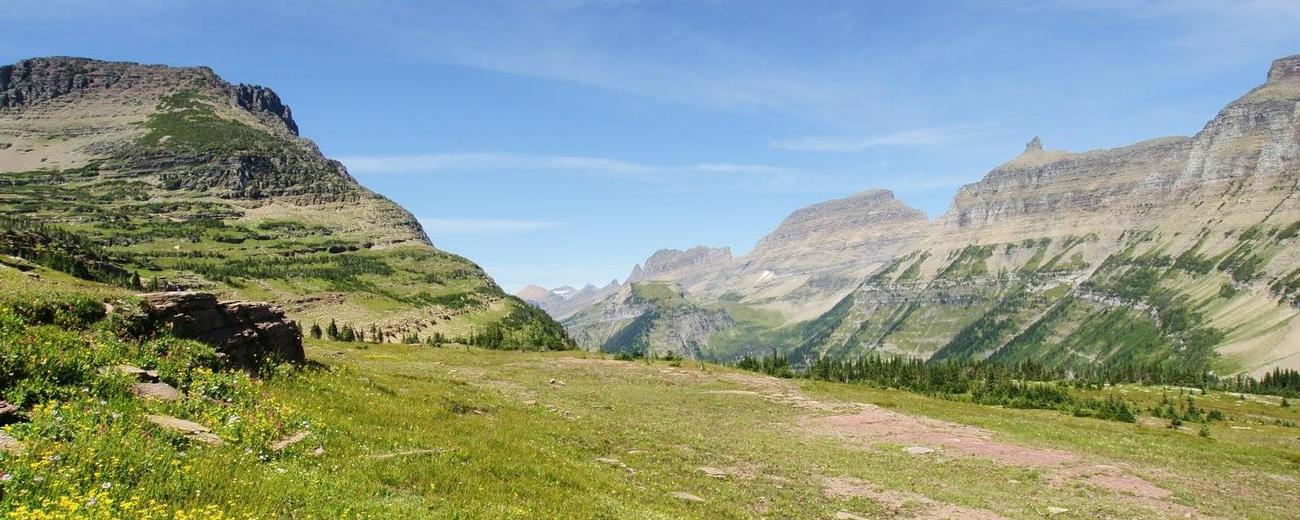


Known to many as the "Crown of the Continent", Glacier National Park encompasses over 1,000,000 acres of forests, alpine meadows, rivers and lakes. Glacier's jagged mountain horns & visually spectacular peaks soar upwards of 10,000 feet as they form the Continental Divide. Modern tourist visitation began in the late 1800's with the arrival of the Great Northern Railroad's Empire Builder Line and hasn't slowed much since. This early interest in the area left Glacier with over 350 structures now listed on the National Register of Historic Sites and six designated National Historic Landmarks. Dedicated as the Waterton-Glacier International Peace Park in 1932, this boarder-spanning national park system celebrates the longstanding peace and friendship between the US & Canada and continues to be the only one of its kind in the world. Glacier National Park and Waterton Lakes National Park have both been designated as Biosphere Reserves and were recognized in 1995 together as a World Heritage Site.
Glacier's diverse habitats, from rainforest to high tundra, are home to over 260 species of birds and 70 species of mammals including Ursus arctos Horribilis (better known as the Grizzly Bear). These same spectacular landscapes are an outdoor enthusiasts'paradise and include over 700 miles of maintained trails that lead deep into one of the largest intact ecosystems in the continental US. Over 50 glaciers still exist in the park, though the majority of them are dramatically receding due to warming environmental temperatures and decreasing yearly snowfall. Glacier National Park is a remarkable place and its marvelous vistas, flora & fauna will remain vivid in any visitors memory long after their vacation is through.