







Below you will find helpful information about Yellowstone NP.
- Calderas & Geysers
- Lodgepole Pine Forests & Fire
- Winter in Yellowstone National Park
- Some Other Things To Know
Calderas & Geysers
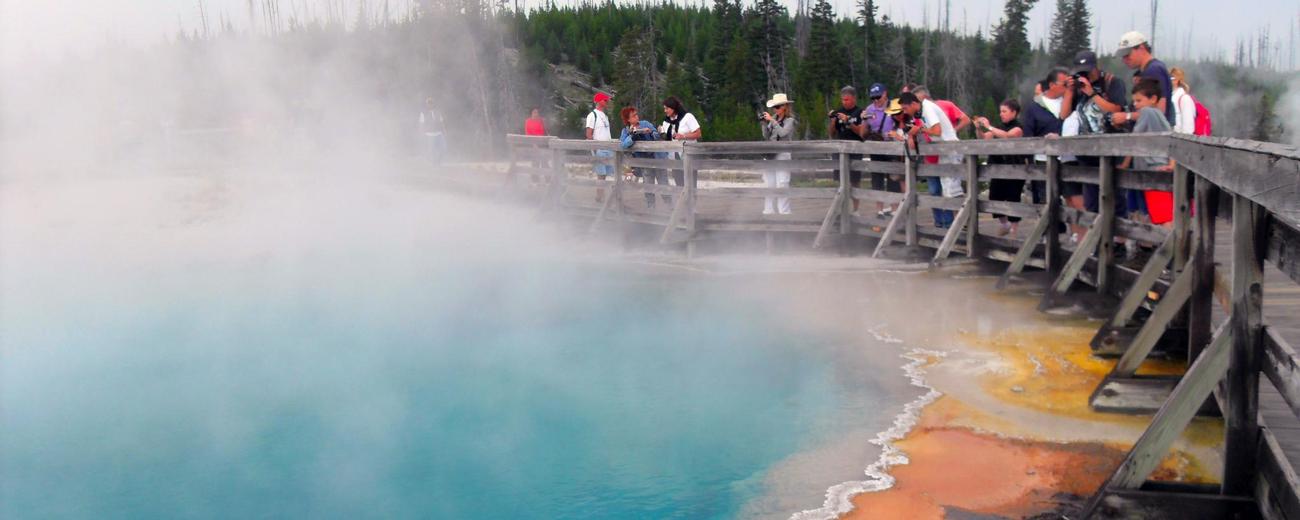
Visitors will be enthralled by the massive natural geothermic forces that can be observed on a constant basis in Yellowstone National Park. The land encompassed by the park sits atop one of the Earth's largest active volcanoes, a huge hot spot that causes all kinds of eruptions from powerful geysers to boiling mud pots. Yellowstone National Park possesses close to 60 percent of the world's geysers. Mammoth Hot Springs, with its quick growing travertine geysers, the Norris Geyser Basin, with the hottest (459 F just 1,087 feet below the surface), oldest (115,000 years), and most dynamic calderas in the park and thermal areas and The Upper Geyser Basin, home to 150 geysers including Old Faithful, will not fail to impress all who visit them.
Lodgepole Pine Forests & Fire
Throughout much of the 20th century, park managers and visitors alike viewed fire as a destructive force, and attempted to master it in an effort to create what they thought was a tamer, more controlled entity. This mentality of fire suppression primed Yellowstone National Park for the fires that took place in the summer of 1988. It was inevitable that a fire such magnitude as the 1988 Yellowstone fires would eventually spark up, but even the most experienced incident commanders had never seen anything quite like it when it happened. The Yellowstone fires shocked the nation and the world, burning 793,000 of the park's 2,221,800 acres, destructing 67 structures and causing more than $3 million in property damage.
As a direct result of the 1988 Yellowstone Fires, national parks and forests across the nation updated their fire management plans, assisted by a panel of independent scientists and revised national fire management policies. Yellowstone has since instituted a new wildland fire management plan with stricter guidelines under which naturally occurring fires may be allowed to burn. 'Let it Burn' fire policy is difficult for many people to understand, but for the lodgepole pine forests fire is as important and necessary as other natural processes. Lodgepole pine forests, like the ones found in Yellowstone National Park, are adapted to fire and need the intense heat of fire to open the cones and drop the seeds for the next generation of forests. Visitors should check with the ranger station for more specific information on specific trails in the south-east part of the park where they can observe the process of regrowth spurned by the fires first hand.
Winter in Yellowstone National Park
Yellowstone National Park is a bustling place during the winter months, full of excellent wildlife viewing opportunity and remarkably easy to access via snow specific vehicles. Yellowstone has been in the national spotlight for the past several years due to the controversy surrounding snowmobile access along these groomed roadways. The National Park Service is currently completing an environmental Impact Statement concerning this issue and the final decision as to the fate of snowmobiling access to Yellowstone due to be released in December 2004. Other popular winter recreation opportunity in Yellowstone includes nordic skiing, snowshoeing, and a chance to ride in a historic snowcoach. Snowcoaches have been operating in Yellowstone National Park since 1955 and provide warm passage into Yellowstone's winter wonderland. Not all park entrances and roadways are open during the winter months so visitors should check with the ranger station for specific information concerning winter access and available services.
Some Other Things To Know
Pets
Pets are allowed here, but there are strict guidelines you will need to follow.
Pets are allowed in public areas, parking lots and within 100 feet of any road. They must be on a leash that is not longer than 6 feet in length at all times. Visitors are not allowed to tie their pet to trees or other objects and leave them unattended. Pet kennels cannot be left outside of vehicles.
If you do leave a pet in a vehicle, make sure you have proper ventilation. If possible, park in a shady spot or plan that part of you visit for early in the day. Although the climate in Yellowstone is cooler than most of the country, vehicles heat-up fast here.
While leashed pets are allowed to accompany their owners to the viewing benches around Old Faithful Geyser, they are not allowed on any other boardwalks or trails. Pets are prohibited from all of Yellowstone’s backcountry, including trails.
You must clean-up after your pet. It is required that you carry proof on vaccinations from a veterinarian. Park Rangers may ask to see those documents.
If you are going to stay overnight in Yellowstone with your pet, you have some options. Pets are allowed in campgrounds and the same rules mentioned earlier apply while camping. Be aware that food and water bowls cannot be left outside.
Pets are not allowed in hotel rooms in the park, but dogs and cats are allowed in some cabins. Check with Xanterra Parks and Resorts for more on availability, fees and regulations.